

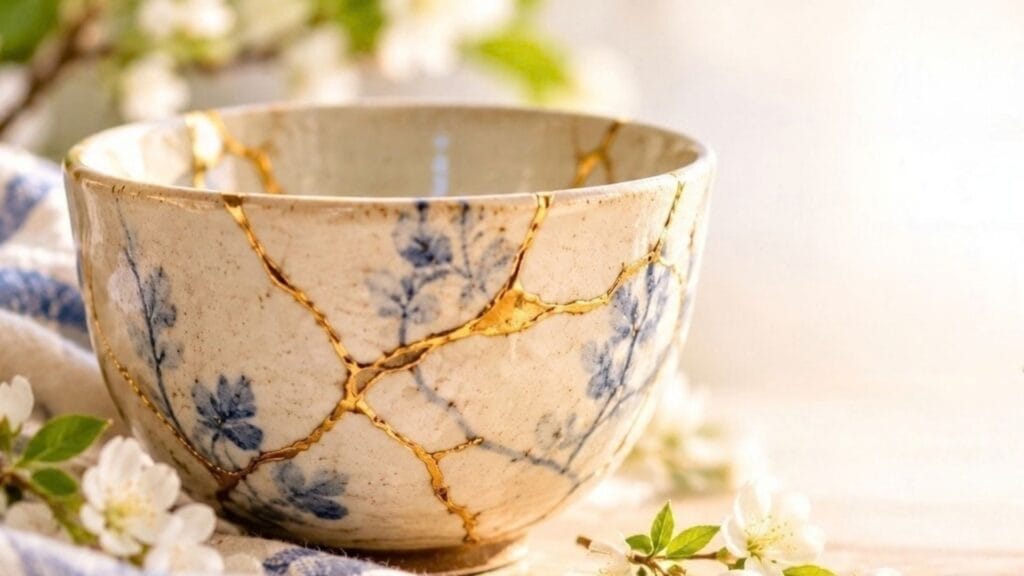
Finding a more peaceful way to live?
Things that hurt us have a way of staying, and sometimes it can get in the way of our progress, but beauty is enduring. It is worth finding.
There are some things in life we do not simply get over. We carry them, think about them, or avoid them. Sometimes we forgive them, but we live with them for a while. Often, we think we have forgiven them, only to discover that something still hurts when we touch the memory.
Maybe that is part of being human. Healing is rarely a straight line. Sometimes it begins with something as simple—and as difficult—as telling ourselves the truth.
The Truth We Sometimes Avoid
There are truths we know long before we are ready to acknowledge them. Something hurt us. Something ended. Someone disappointed us. We made a choice that we regret. We stayed too long, or left too soon.
Chances are, we did not deserve that treatment, or maybe, if we are being completely honest, we hurt someone else. Truth can be uncomfortable because it removes our ability to pretend that something did not happen.
Yet, the truth is also where healing can begin. We cannot change what we refuse to see, and seeing the truth does not mean dwelling in it forever. It simply means allowing ourselves to say:
This happened. It affected me, and now I have to decide what I will do with it.
That is a very different thing from allowing the past to define the rest of our lives.
Forgiveness Is Not Pretending that Things Did Not Hurt Us
For a long time, I think many of us learned to think of forgiveness as something we give to another person.
Forgive and forget. Let it go. Move on, but real forgiveness can be much more complicated. Sometimes forgiveness begins with acknowledging that what happened actually hurt.
On occasion, it requires anger. Once in a while it requires grief. Sometimes it demands distance, and sometimes forgiveness includes a boundary. We can forgive someone without giving them the same access to us. Who said we can wish someone well without inviting them back into our lives.
We can release our desire to keep carrying the injury without pretending that the injury never happened. Forgiveness does not require us to rewrite history. It asks us to stop allowing history to hold our future hostage.
And Then There Is Self-Forgiveness
This may be the hardest kind. It is one thing to say; I forgive you, to another person, but it can be much harder to look at ourselves and say:
I did the best I could with what I knew then.
Maybe we made mistakes; we ignored what we already knew; we trusted the wrong person. It is possible we stayed because we were afraid, or maybe we did something we wish we could undo.
Guilt and shame can keep us living in an old version of ourselves, but we can give ourselves permission to become wiser. We can learn from the past and decide to make a different choice today. That is not denial. That is growth.
Self-forgiveness does not mean excusing ourselves. It means acknowledging our humanity while taking responsibility for what comes next.
Hurt can Sting, but Healing Can Be Quiet
We sometimes expect healing to arrive dramatically.
A breakthrough. A revelation, or a time when everything suddenly makes sense. However, much of healing is quieter than that. It can look like taking a deep breath before responding, or saying no without explaining yourself for twenty minutes.
It can look like leaving a conversation that is no longer healthy, or sitting quietly with a cup of tea. Writing something in a journal. Taking a walk. Making something with your hands. Calling someone who makes you feel safe.
Or noticing, perhaps for the first time, that something which once caused enormous pain no longer has quite the same power. That is progress, too.
We learn to notice the beautiful things again
Pain has a way of narrowing our attention. When we are hurting, we can become very good at noticing what is wrong, but healing invites us to notice what is still good.
A beautiful morning. The smell of something baking. A conversation that makes us laugh. Flowers opening in a garden. Music we had forgotten we loved. It may be a handmade thing taking shape beneath our hands. A child’s laughter. A quiet room.
Sometimes, we realize we are no longer thinking about the thing that once occupied so much of our mind. These moments may seem small. They aren’t. They remind us that our lives are larger than our wounds.
We do not have to become who we were before
Maybe this is one of the most important things I have learned.
Healing does not mean returning to the person we were before the hurt. Sometimes we become someone different. More discerning, compassionate, and honest. More willing to protect our peace. In addition, we are more aware of our own needs. More grateful for ordinary moments. More willing to admit that we do not have everything figured out. None of those are failures, but part of becoming.
Truth, Forgiveness, and Healing Belong Together
Perhaps these three things connect in a way we don’t always recognize.
Truth allows us to see. Forgiveness allows us to release. Healing allows us to grow.
None of them needs to happen overnight, and none of them means we will never feel sadness, anger, resentment, or regret again.
We are human. Some feelings return, and some memories can remain.
Yet, with time, reflection, kindness, and perhaps a little wisdom, we can learn to meet those feelings differently.
We can stop fighting ourselves. Stop demanding that healing happen according to someone else’s timetable.
We can begin again. Quietly. Gently. One small choice at a time.
Choose the Next Beautiful Thing, and Rest the Hurt
Maybe healing is not always about solving everything. Perhaps sometimes it is about asking:
What is the next kind thing I can do for myself?
Not the biggest thing. Not the perfect thing. Just the next thing. Take the walk. Write the page. Set the boundary. Tell the truth. Accept the apology—or accept that you may never receive one.
Forgive yourself for being human. Notice the morning light. Make something beautiful. Rest. Begin again.
There is no prize for carrying pain longer than necessary, and there is no shame in taking your time.
Your journey toward peace is your own. You do not have to become untouched by life.
The genuine work is learning that, even after life has hurt us, there is still something beautiful we can make with what remains.
Sometimes, that something beautiful is simply a new way of living.